Consumer Units: Guide to Safety, Types, and Upgrades
What Is a Consumer Unit?
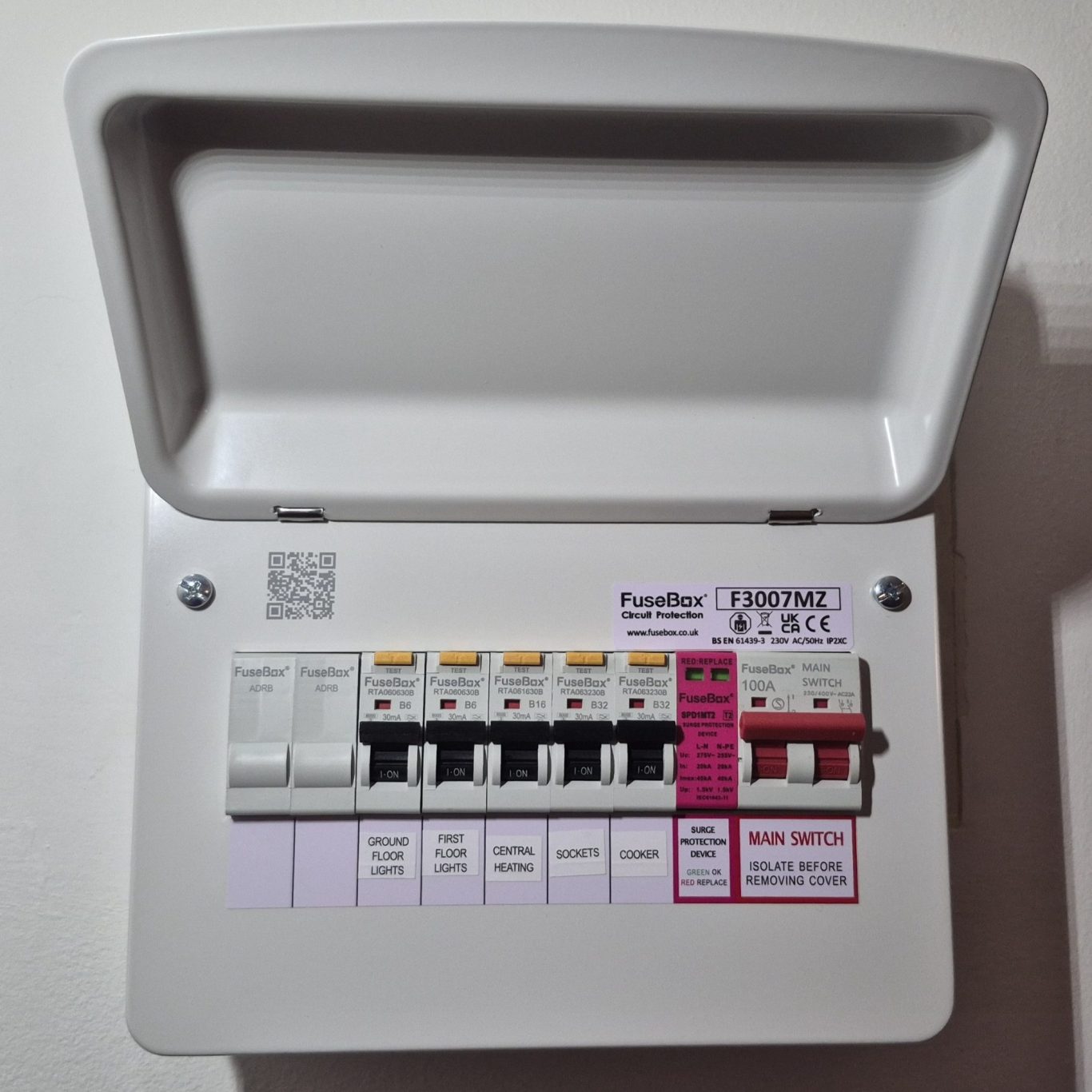
A consumer unit—sometimes called a fuse box—is the heart of your home’s electrical system. It distributes electricity safely to your circuits and protects your home from electrical faults. Understanding your consumer unit can help you spot issues early and make informed decisions about upgrades or maintenance.
Your consumer unit houses all the fuses or circuit breakers that protect your electrical circuits. Modern units often include RCDs which detect if electricity is leaking away from its intended path—like through a person or faulty wiring—and immediately cuts the power to prevent harm, reducing the risk of electric shocks or fire.
Over time, you may need a consumer unit upgrade to keep up with modern electrical demands. Upgrades will include RCBO protection, which safeguards each circuit against overloads, short circuits, and electric shocks, also included will be surge protection, which helps protect your sensitive electronics—such as computers, TVs, and home entertainment systems—from power surges or lightning strikes.
Types of Consumer Units
Rewirable Fuse Boards
• Common in homes built before the 1980s.
• Use screw-in fuse wire, which must be manually replaced when it blows.
• Incorrectly rated fuse wire can be fitted, increasing the risk of overheating, fire, or electrical faults.
• Do not provide RCD protection, offering minimal defence against electric shock.
• Homes with rewirable fuse boards are generally recommended for upgrade to a modern consumer unit for improved safety and compliance.
BS 1361 Cartridge Fuse Boards
• Slightly newer than rewirable boards, using cartridge fuses instead of screw-in fuses.
• Lacks modern RCD protection, though safer than basic rewirable boards.
MCB (Miniature Circuit Breaker) Units
• Later replacement for older rewirable fuse boards.
• Circuit breakers automatically trip in the event of an overload or short circuit.
• After tripping, the circuit can usually be restored by resetting the breaker, similar to operating a switch.
• Provide protection against overload and short circuit faults only.
• Do not provide protection against electric shock unless combined with RCD protection.
RCD Consumer Units
• Provide additional protection against electric shock by rapidly disconnecting the power supply if a fault to earth is detected.
• Particularly important for kitchens, bathrooms, outdoor circuits, and areas where water is present.
• Earlier split-load boards typically protected socket circuits with an RCD, while lighting and other circuits remained on MCBs without RCD protection.
RCBO Units (Combination of MCB + RCD per Circuit)
• Each circuit has its own RCBO, giving individual protection against overload and earth leakage.
• Provides the highest level of safety for modern homes.
• Particularly useful for homes with sensitive electronics or high electrical demand.
• Often installed as the standard board when upgrading older consumer units.
Some of the signs You Might Need a Consumer Upgrade
• Fuseboards with MCBs/RCBOs of different makes and the consumer unit has been modified to house them
• Accessible holes in the top and side of the consumer unit
• Renovations where new circuits will need RCD protection
• No RCD protection for sockets that could be used outdoors
• Electrical Installation Condition Reports (EICR) recommend upgrading in these situations to ensure safety and compliance
Consumer Unit Safety Tips
• Never attempt DIY work on your consumer unit.
• All work must be done by a qualified Part P registered electrician.
• Test your RCDs regularly to ensure they function properly.
FAQs
Q: How often should a consumer unit be replaced?
A: Typically every 25–40 years, or sooner if it shows signs of wear or doesn’t meet modern safety standards.
Q: Can I add extra circuits to my existing unit? A: Yes, but a professional assessment is needed to ensure your unit can handle the additional load safely.
Conclusion
Understanding your consumer unit is key to keeping your home safe. If you notice any issues or your home has an older unit, it’s wise to contact a qualified electrician for inspection and advice.
Why Choose RW Currion Electrical For Your Consumer Unit Installations?
• Fully qualified and insured
• Clear explanations — no jargon
• Work completed to the latest BS 7671 standards
• Safety-first approach to protect your home, family, and electronics
• All installations come with full certification and Part P registration emailed for your records.
Honest advice on any consumer unit work required - learn more at our consumer unit services page
Call now: 01295 533378
Mobile: 07740 100378