

Power Cutting Out Randomly – Intermittent Electrical Faults Explained

Why Does My Power Keep Cutting Out Randomly?
If your electrics seem to work fine one minute and then suddenly cut out the next, you may be dealing with an intermittent electrical fault.
These types of faults can be frustrating because they don’t always happen when you’re trying to investigate them — and they can disappear just as quickly as they appear.
What Is an Intermittent Electrical Fault?
An intermittent fault is a problem within an electrical circuit that only occurs occasionally, rather than all the time.
Unlike a permanent fault, where a circuit trips immediately every time it is switched on, intermittent faults can:
• Come and go without warning
• Only happen under certain conditions
• Seem to “fix themselves” temporarily
Common Signs of an Intermittent Fault
You might notice:
• Power cutting out randomly
• A circuit tripping occasionally but not always
• Lights flickering or dimming unexpectedly
• Sockets or appliances working sometimes but not others
• Problems that seem worse in certain weather conditions
What Causes Intermittent Electrical Faults?
These faults are often caused by issues that aren’t immediately obvious.
Loose Connections
Connections within sockets, switches or junction boxes can loosen over time.
This can cause:
• Arcing
• Heat build-up
• Temporary loss of power
Neutral Faults
A loose or damaged neutral connection can cause unpredictable behaviour in a circuit.
You might notice:
• Lights going brighter or dimmer than normal
• Circuits behaving erratically
• Power loss in parts of the property
Moisture or Damp
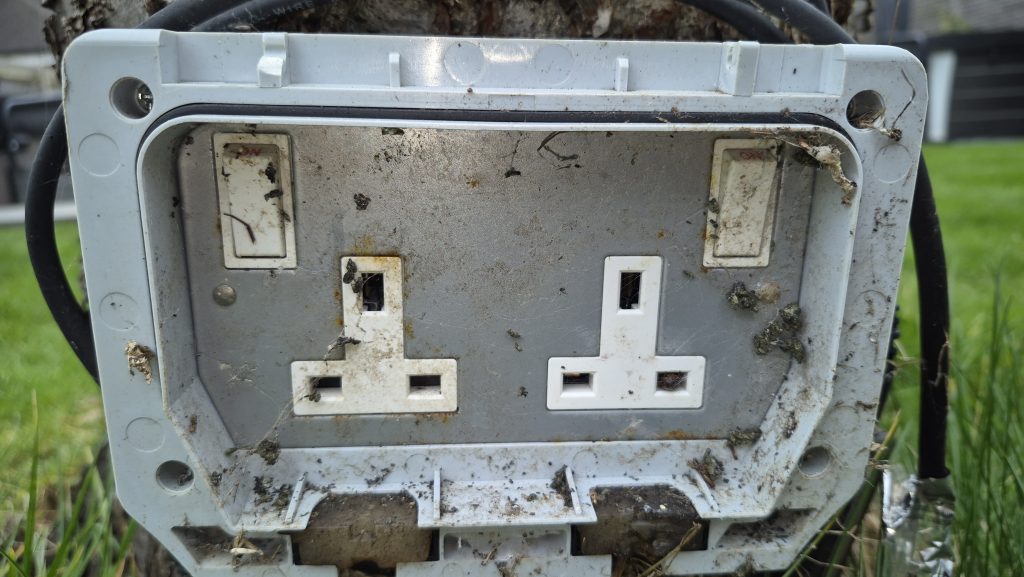
Water ingress in outdoor fittings, garages or external cables can cause faults that only appear in certain conditions.
• More common in wet or cold weather
• Can cause circuits to trip unpredictably
Damaged or Deteriorating Cables
Cables hidden in walls or ceilings can become damaged over time.
• Rodents
• DIY work
• General wear and tear
These faults may only show up when the cable is under load or affected by movement or weather conditions.
How Are Intermittent Faults Found If They’re Not Happing at the Time?
One of the biggest challenges with intermittent faults is that the problem often isn’t present when the electrician arrives.
Even if everything appears to be working normally, there are still ways to track down the cause.
Testing the Circuit Under Different Conditions
Some faults only occur when a circuit is under load or at certain times.
An electrician may:
• Test the circuit with equipment connected
• Try to recreate the conditions when the fault usually occurs
• Monitor how the circuit behaves over time
Inspecting Connections
Loose or damaged connections are a very common cause of intermittent faults.
These can be found by:
• Checking sockets, switches and junction boxes
• Inspecting the consumer unit connections
• Looking for signs of overheating or arcing
Electrical Testing
Even if a circuit is not currently tripping, test equipment can often reveal underlying issues.
This may include:
• Insulation resistance testing
• Continuity testing (especially on ring circuits)
• Earth fault loop impedance testing
Looking for Patterns
Experience plays a big part in fault finding.
Clues such as:
• Faults happening at certain times of day
• Problems linked to specific appliances
• Issues during wet or cold weather
can help narrow down the cause.
Working With the Customer
Because intermittent faults don’t always show themselves straight away, it’s not always possible to find the problem in a single visit.
In some cases, you may be asked to:
• Make a note of when the fault occurs
• Record what you were using at the time
• Note any patterns, such as time of day
• Keep track of weather conditions, especially if moisture could be a factor
This information can be extremely helpful in identifying the cause.
Split-Load Consumer Units Can Make Fault Finding More Difficult
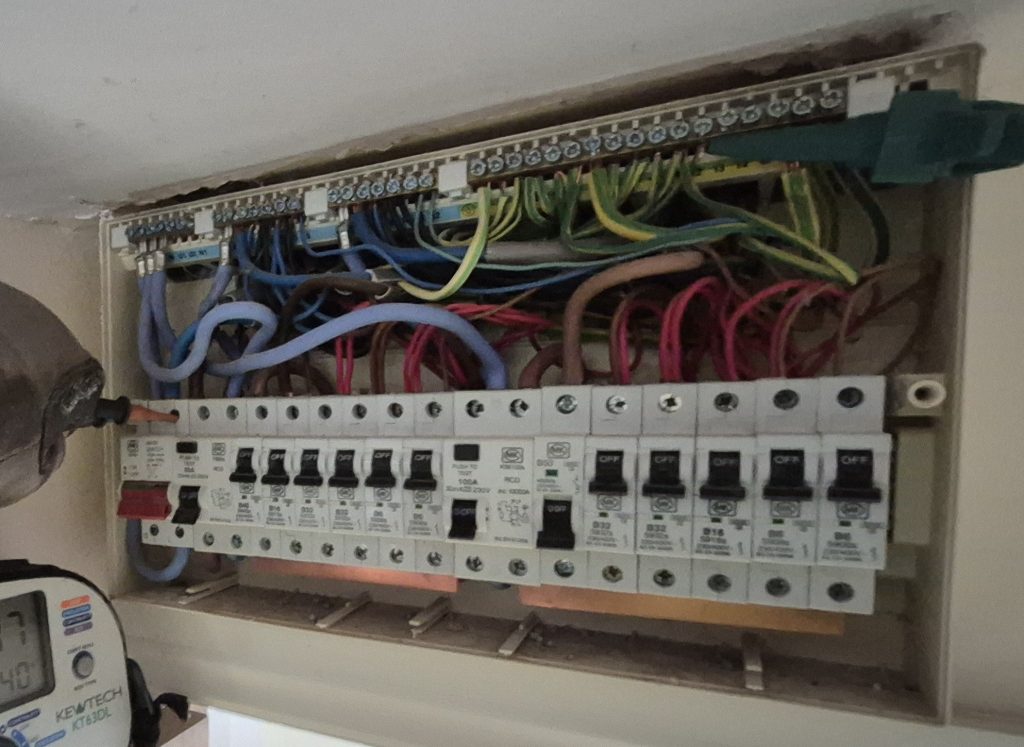
If your consumer unit is a split-load board (with one or two RCDs protecting multiple circuits), it can be harder to identify exactly which circuit is causing the problem.
This is because:
• A single RCD may protect several circuits
• When it trips, it’s not always clear which circuit caused it
• All circuits on that RCD lose power at the same time
In these cases, fault finding can take longer and may need a more methodical approach.
An electrician may need to:
• Disconnect individual circuits one at a time
• Leave them isolated and monitor whether the tripping stops
• Gradually narrow down which circuit is causing the issue
If the tripping stops when a particular circuit is disconnected, this helps identify where the fault is.
Further testing can then be carried out on that specific circuit to locate the exact problem.
In some cases, parts of the faulty circuit may also need to be disconnected to narrow it down further to the exact section of wiring or accessory causing the issue.
Because of this process, it’s not always possible to diagnose the fault in a single visit, especially with intermittent issues.
Checking for Neutral Faults
Neutral issues can be especially tricky because they don’t always cause immediate tripping.
An electrician may:
• Check neutral continuity
• Inspect connections at the consumer unit and accessories
• Look for signs of imbalance or unusual voltage behaviour
Real Example from a Recent Job
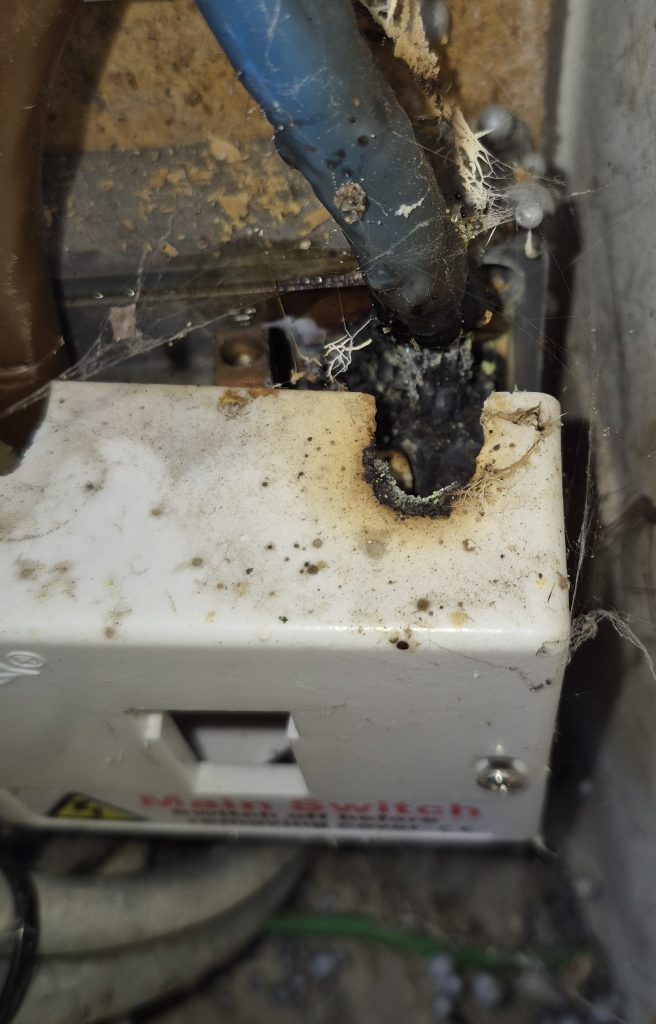
I was recently called out to a property near Banbury where the power was cutting out intermittently, and then one morning completely failed.
After testing and isolating circuits, the issue was traced to a loose neutral connection in the meter box that had been overheating over time. This wasn’t obvious from the wiring inside the house.
Once located and repaired, the problem was fully resolved.
power loss and are a serious safety risk
Are Intermittent Faults Dangerous?
Intermittent faults should never be ignored.
In some cases they can indicate:
• Overheating connections
• Arcing faults
• Damage within the wiring
Left unresolved, these issues can become more serious over time.
What Should You Do If You Have an Intermittent Fault?
If your electrics are cutting out randomly, it’s best to have the installation checked properly.
A qualified electrician can:
• Identify the source of the fault
• Carry out safe and thorough testing
• Make any necessary repairs
Need Help With an Intermittent Fault?
RW Currion Electrical is run by Richard Currion, a local electrician based in Adderbury, providing fault finding and electrical repairs in Banbury and surrounding areas.
• Fully qualified and insured
• Over 35 years of experience
• Clear explanations — no jargon
• Work completed to the latest BS 7671 standards
• All work fully tested and certified where required
If your power is cutting out randomly or you suspect an intermittent fault, get in touch:
📞 01295 533378
📱 07740 100378
💻 Request a quote online
Covering Banbury, Adderbury and surrounding areas.