Bathroom Electrical Zones Explained
Electrical safety in bathrooms is especially important because water and electricity together increase the risk of electric shock.
To reduce this risk, the UK Wiring Regulations (BS 7671) divide bathrooms into specific electrical zones. Each zone determines what electrical equipment can be installed and the minimum IP (Ingress Protection) rating required.
Understanding these zones helps ensure that lighting, fans, and other electrical equipment are installed safely and legally.
What Are Bathroom Electrical Zones?
Bathroom electrical zones define how close electrical equipment can be installed to water sources such as baths, showers, and basins.
The zones are:
• Zone 0
• Zone 1
• Zone 2
• Outside Zones
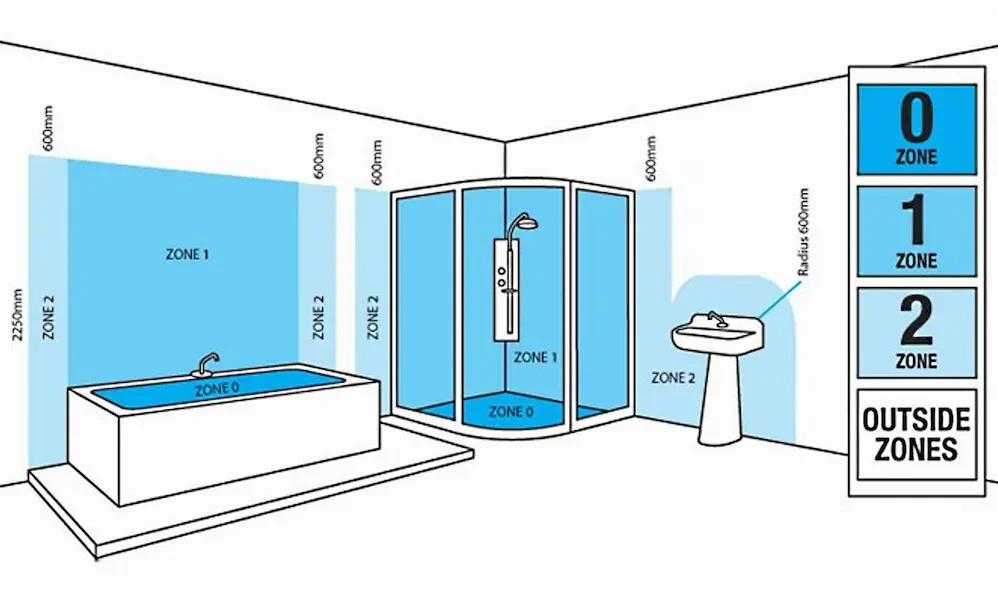
See the diagram above for a visual guide to these zones. Each zone is explained in more detail below.
Zone 0
Zone 0 is the area inside the bath or shower tray where water is present.
Because this area is most at risk of water contact, strict rules apply.
Requirements include:
• Equipment must be low voltage (maximum 12V AC or 30V DC)
• The transformer must be located outside Zones 0, 1 and 2
• Equipment must have a minimum IP rating of IPX7 (protected against immersion)
Examples sometimes installed here include special waterproof lighting designed specifically for this environment.
Zone 1
Zone 1 is the area directly above the bath or shower, extending up to 2.25 metres from the floor.
Electrical equipment allowed in Zone 1 must be designed for damp conditions.
Typical requirements:
• Minimum IPX4 rating (splash resistant)
• Equipment must be RCD protected
• Suitable items include shower lights, extractor fans, or shower units designed for Zone 1 installation
If water jets are likely (for example in some shower installations), a higher IPX5 rating may be required.
Zone 2
Zone 2 extends 0.6 metres horizontally beyond the edge of the bath or shower and up to 2.25 metres high.
Electrical equipment installed here must also be suitable for damp conditions.
Typical requirements:
• Minimum IPX4 rating
• RCD protection required
• Common equipment includes wall lights, extractor fans, and shaver sockets designed for bathroom use
Outside the Zones
Electrical equipment here has fewer restrictions, but must still comply with general electrical safety regulations.
Common installations outside the zones include:
• Ceiling lights
• Standard switches (in some layouts)
• Pull-cord switches
• Socket outlets where permitted
Washing machines and tumble dryers may be installed in a bathroom provided they are supplied from a switched fused flex outlet installed outside the zones (beyond Zones 0, 1 and 2).
RCD protection is required for new or altered bathroom circuits under modern wiring regulations, and will be provided when a consumer unit is upgraded to a modern unit with RCD or RCBO protection.
Why Bathroom Zones Matter
Installing electrical equipment in the wrong location or using equipment with an incorrect IP rating can create serious safety risks.
Correct zoning ensures:
• Reduced risk of electric shock
• Protection against water entering electrical equipment
• Compliance with BS 7671 wiring regulations
• Safer bathrooms for homeowners and tenants
Professional Bathroom Electrical Work
Bathroom electrical installations must comply with Part P of the Building Regulations, and in many cases the work must be carried out or certified by a qualified electrician.
If you are planning a bathroom renovation or installing new lighting or extractor fans, it is important to ensure the installation meets current safety standards.
You can learn more in our Electrical Safety Hub, or visit our Electrical Services page if you need help with bathroom electrical work.
Further Advice on Bathroom Electrical Safety
If you need advice on bathroom electrical zones, IP ratings, or electrical installations such as lighting or extractor fans in Banbury and the surrounding towns and villages, RW Currion Electrical is happy to help. All work is carried out in accordance with the latest BS 7671 Wiring Regulations to ensure installations remain safe and compliant.
You may also find these guides useful:
• IP Ratings Explained
• Class 1, Class 2 and Class 3 Electrical Equipment
• Types of Lighting Explained
• Electrical Safety Hub
Call now: 01295 533378
Mobile: 07740 100378