Class 1, Class 2 and Class 3 Electrical Equipment
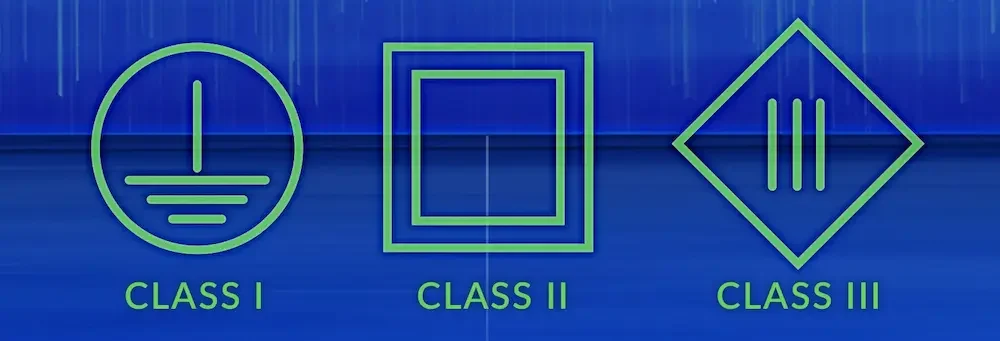
Electrical appliances and equipment are designed with different levels of protection against electric shock. These protection methods are known as equipment classes.
The three main types are:
• Class 1
• Class 2
• Class 3
Each class uses a different method to help keep users safe.
Class 1 Electrical Equipment
Class 1 equipment relies on basic insulation and an earth connection for protection.
If a fault occurs inside the appliance and a live conductor touches the metal casing, the earth conductor provides a path for fault current, allowing the protective device (such as a fuse, MCB or RCBO) to disconnect the supply.
Because of this, Class 1 equipment must always be connected to an earthed electrical supply.
Common examples
• Washing machines
• Refrigerators
• Electric cookers
• Metal light fittings
• Some kettles and toasters
You will often see the earth symbol on Class 1 equipment or its connection point.
Class 2 Electrical Equipment
Class 2 equipment does not require an earth connection.
Instead, it uses double insulation or reinforced insulation to prevent live parts from becoming accessible.
Because of this extra layer of protection, Class 2 appliances are often called double-insulated equipment.
Common examples
• Phone chargers and laptop power supplies
• Hairdryers
• Many modern light fittings
• Power tools with plastic casings
• Some small household appliances
Class 2 equipment is usually marked with the double square symbol, which indicates that the appliance has two layers of insulation for protection.
Class 3 Electrical Equipment
Class 3 equipment operates using extra-low voltage (ELV).
Because the voltage is very low, the risk of electric shock is greatly reduced.
These appliances are normally supplied through a transformer or electronic driver that reduces the voltage.
Common examples
• Some LED lighting systems
• Garden lighting
• Decorative lighting
• Certain bathroom lighting systems
Class 3 equipment does not rely on earthing for protection.
Class 2 Equipment and Older Lighting Circuits
During electrical inspections such as an EICR, it is sometimes found that older lighting circuits do not have an earth conductor installed, which was common in some older installations. At the time, an earth core was often not considered necessary as most light fittings and switches were made from plastic or wood.
We also often find that metal light fittings or metal switches have been installed on these circuits, usually during DIY alterations or refurbishments. Without an earth conductor, these fittings cannot be safely earthed.
In these situations the metal accessories will need to be replaced for the installation to receive a satisfactory report.
The safest solution is to install Class 2 (double-insulated) light fittings or switches, which are designed to operate safely without an earth connection. Some metal Class 2 fittings are also available, provided they are specifically designed and marked as double insulated.
Why Equipment Classes Matter
Electrical equipment classes help ensure appliances are designed with appropriate protection against electric shock.
In simple terms:
• Class 1 – relies on earthing
• Class 2 – uses double insulation
• Class 3 – operates on extra-low voltage
Understanding these differences helps ensure that electrical equipment is installed and used safely.
Need Advice on Electrical Safety?
If you need advice on electrical installations, lighting, or inspections such as an EICR, RW Currion Electrical is happy to help in Banbury and the surrounding towns and villages.
All work is carried out in accordance with the latest BS 7671 Wiring Regulations to ensure installations remain safe and compliant.
You may also find these guides helpful:
• IP Ratings Explained
• Electrical Wiring Zones Explained
• Bathroom Electrical Zones Explained
Call now: 01295 533378
Mobile: 07740 100378