What Is an IP Rating?
IP ratings appear on many electrical products such as lights, outdoor sockets, extractor fans, and enclosures. They indicate how well the equipment is protected against solid objects like dust and against moisture or water.
Understanding IP ratings helps ensure electrical equipment is suitable for the environment it is installed in, particularly in locations such as bathrooms, kitchens, and outdoor areas where water may be present.
What Does IP Mean?
IP stands for Ingress Protection.
It is an international standard that defines how well an electrical enclosure protects against:
• Solid objects (dust, fingers, tools)
• Liquids (water, splashes, rain)
An IP rating is usually written as IP followed by two numbers, for example:
IP44, IP65, or IP67
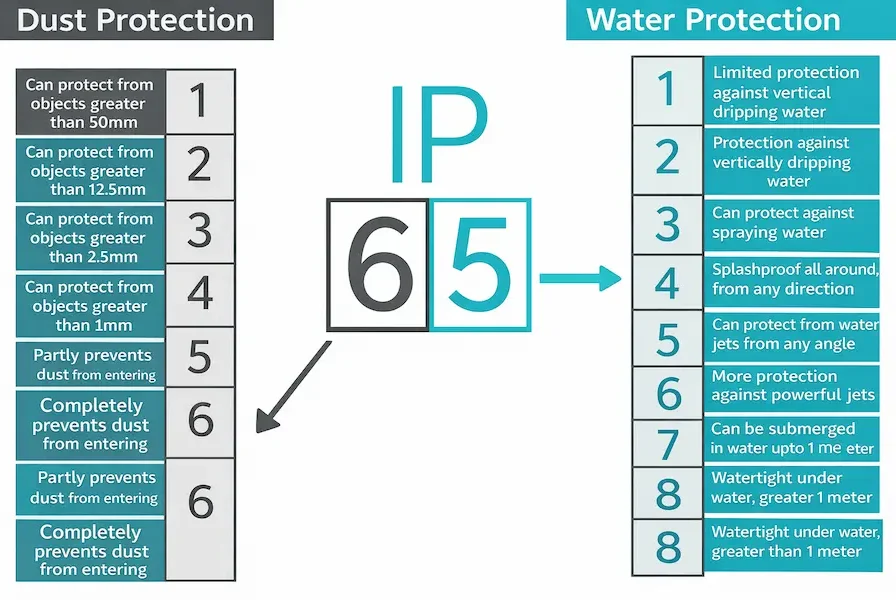
What the IP Numbers Mean
The two numbers in an IP rating each represent a different type of protection.
First number – protection against solid objects
Examples:
• IP1X – Protected against objects larger than 50mm
• IP2X – Protected against fingers or objects larger than 12.5mm
• IP4X – Protected against small tools and wires
• IP5X – Dust protected
• IP6X – Dust tight
Second number – protection against water
Examples:
• IPX4 – Protected against splashing water
• IPX5 – Protected against water jets
• IPX6 – Protected against powerful water jets
• IPX7 – Protected against temporary immersion in water
Common IP Ratings in Homes
Common IP ratings you may see on electrical equipment include IP20, IP44, IP65, and IP67.
What Is IP20?
IP20 is typical for indoor electrical equipment such as switches and sockets in dry rooms. It protects against solid objects larger than 12.5 mm, such as fingers, but provides no protection against water.
What Is IP44?
IP44 is often used for bathroom equipment and outdoor fittings where protection against splashing water is required. It provides protection against solid objects larger than 1 mm and against water splashing from any direction.
What Is IP65?
IP65 equipment is dust tight and protected against water jets. This rating is commonly used for outdoor lighting, garden equipment, and electrical enclosures exposed to weather.
What Is IP67?
• Type A: Modern RCDs/RCBOs that can handle currents from new electronic equipment, LED lights, and variable speed appliances. All new consumer units come with Type A devices.
• Type AC: Older RCDs that may not trip with modern electronics; may need upgrading if you’re installing LEDs or electronic appliances.
IP Ratings in Bathrooms.
Bathrooms require careful selection of electrical equipment due to the presence of water.
The UK Wiring Regulations divide bathrooms into different zones, each requiring suitable IP protection.
For example:
• Equipment in Zone 1 usually requires IPX4 or higher
• Equipment in Zone 2 must also be suitable for areas exposed to moisture
Correct IP ratings help reduce the risk of electric shock and equipment damage.
IP Ratings for Outdoor Electrical Equipment
Outdoor installations are exposed to rain, dirt, and temperature changes.
Electrical equipment installed outdoors often requires ratings such as:
• IP44 for basic splash protection
• IP65 or higher for better weather protection
Choosing the correct rating helps ensure long-term reliability and safety.
Why IP Ratings Matter
Using equipment with the correct IP rating helps:
• Prevent water entering electrical equipment
• Reduce the risk of electric shock
• Protect wiring and internal components
• Improve reliability and lifespan of installations
Installing equipment with insufficient protection can lead to electrical faults or dangerous conditions.
When to Get Professional Advice
If you are unsure what IP rating is required for a particular location, it is best to seek advice from a qualified electrician.
Correct selection and installation of electrical equipment ensures the installation complies with BS 7671 Wiring Regulations and remains safe to use.
Further Advice on IP Ratings
If you need advice on IP ratings or electrical installations such as lighting or consumer unit upgrades in Banbury and the surrounding towns and villages, RW Currion Electrical is happy to help. All work is carried out in accordance with the latest BS 7671 Wiring Regulations to ensure installations remain safe and compliant.
You may also find these guides useful:
• RCD/RCBO Explained
• What Is an EICR?
• RW Currion Electrical Blog
Call now: 01295 533378
Mobile: 07740 100378