Wiring Zones Explained
Electrical wiring in walls is not installed randomly. UK wiring regulations require cables to be installed within specific “safe zones”, technically known as prescribed zones, so people know where wires are likely to be located when drilling or fixing items to a wall.
Understanding wiring zones can help prevent accidentally drilling into hidden electrical cables, which could cause electric shock, damage to wiring, or a tripped circuit.
What Are Electrical Wiring Zones?
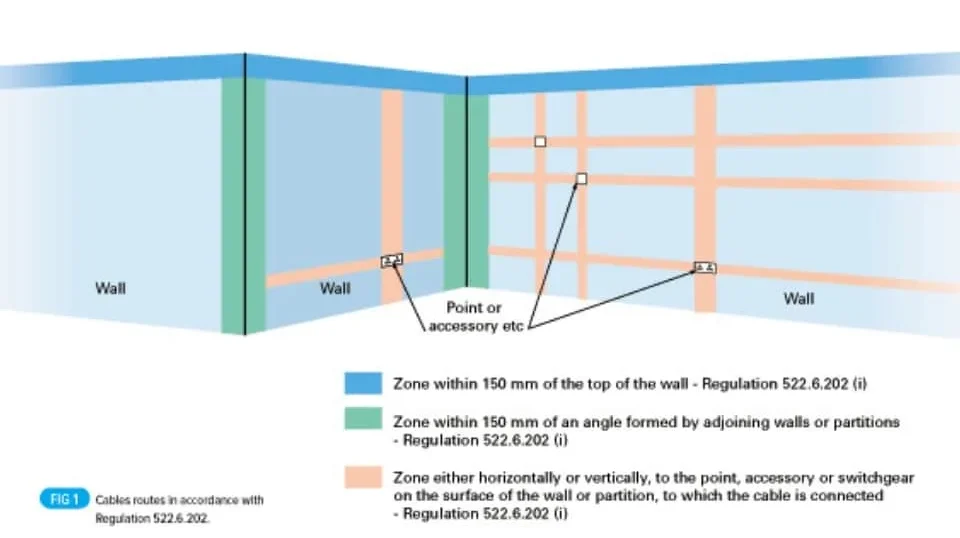
Electrical cables are normally run vertically or horizontally from electrical accessories so their position can be predicted. These zones are defined in the UK Wiring Regulations (BS 7671).
Electrical accessories within these zones include:
• Socket outlets
• Light switches
• Fused connection units (spurs)
• Consumer units
• Other fixed electrical accessories
If cables are installed outside recognised wiring zones and are buried less than 50 mm from the wall surface, they must be installed in earthed metallic conduit or trunking to provide mechanical protection.
By restricting cables to predictable areas, the risk of drilling into hidden wiring is reduced.
Horizontal Wiring Zones
Cables are allowed to run horizontally directly in line with electrical accessories.
For example, cables may run:
• Directly left or right from a socket
• Directly left or right from a switch
• Across a wall between accessories at the same height
This means if you see a socket or switch on the wall, there is likely a cable running horizontally from it. Before drilling into a wall, it is safest to assume a cable may be present and check the area carefully.
Vertical Wiring Zones
Cables may also run vertically above or below electrical accessories.
Common examples include:
• From a socket straight up or down within the vertical wiring zone
• From a switch straight up or down within the vertical wiring zone
• From a switched fused spur straight up or down within the vertical wiring zone
• From a thermostat straight up or down within the vertical wiring zone
• From any other electrical accessory, with cables running vertically above or below it within the wiring zone
Because of this, it’s important to be cautious when drilling directly above or below switches and sockets.
Wiring Zones Near Ceilings and Corners
UK wiring regulations also allow cables to run within specific zones near the edges of a wall.
These zones include:
• Within 150mm of the top of a wall (near the ceiling)
• Within 150mm of internal corners
These areas allow cables to run around a room while still remaining within recognised safe zones.
Why Wiring Zones Are Important
Knowing where cables are likely to run helps reduce the risk of accidental damage when:
• Installing shelves
• Mounting televisions
• Fitting kitchen cabinets
• Hanging mirrors or pictures
• Drilling for curtain rails or wall units
Drilling into a cable can cause electric shock, short circuits, or expensive repairs.
Important: Not All Wiring Follows Modern Zones
In older properties, wiring may not always follow modern safe zone rules.
Examples include:
• Very old wiring installed before modern regulations
• DIY alterations carried out incorrectly
• Extensions or modifications carried out without professional installation
In some older homes it is also common to find cooker cables installed diagonally between the cooker control switch and the cooker connection point.
When to Call an Electrician
If you are unsure whether cables may be present in a wall, or if you suspect wiring has been damaged, it is best to contact a qualified electrician.
Signs of damaged wiring may include:
• Circuit breakers or RCD/RCBOs tripping
• Sockets or switches stopping working
• Burning smells or buzzing sounds from accessories
In many cases, drilling into a live cable will be obvious straight away — often with a flash, a bang, and the circuit breaker tripping.
Electrical faults should always be inspected professionally to ensure the installation remains safe.
Further Advice on Wiring Zones
If you need advice on electrical wiring, fault finding, or installations such as lighting upgrades or consumer unit replacements in Banbury and the surrounding towns and villages, RW Currion Electrical is happy to help. All work is carried out in accordance with the latest BS 7671 Wiring Regulations to ensure electrical installations remain safe and compliant.
You may also find these guides useful:
• IP Ratings Explained
• Bathroom Electrical Zones Explained
• RCD and RCBO Protection Explained
• RW Currion Electrical Blog
Call now: 01295 533378
Mobile: 07740 100378