
AFDDs Explained (Arc Fault Detection Devices)
What Does an AFDD Do?
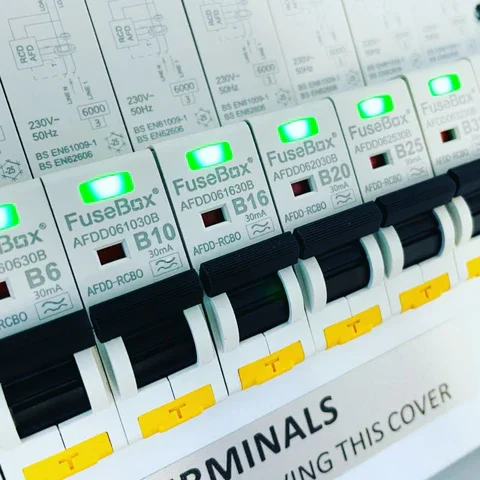
Arc Fault Detection Devices (AFDDs) are a newer type of protective device designed to help prevent electrical fires.
They work alongside devices like MCBs, RCDs and RCBOs, adding an extra layer of protection within a consumer unit.
AFDDs contain a built-in microprocessor that continuously monitors the electrical waveform on a circuit. By analysing the shape and frequency of the current, it can detect the distinctive signature of dangerous arcing faults that standard protective devices may not pick up.
If an arc fault is identified, the AFDD will quickly disconnect the circuit to reduce the risk of fire.
Where Do Arc Faults Occur?
Arc faults can occur in a range of situations, often where there is damage, wear or a poor connection.
Common causes include:
• Damaged or worn cables
• Loose connections in accessories or junctions
• Cables trapped behind walls, under floors or by furniture
• Nails or screws penetrating cables
• Deteriorated insulation over time
• Faulty or damaged appliances
• Leads and extension cables that have been bent or crushed
These types of faults can create small electrical arcs that may go unnoticed but can generate heat and increase the risk of fire.
How Is An AFDD Different From Other Devices?
Each protective device has a different role:
• MCB – protects against overloads and short circuits
• RCD – protects against electric shock and earth leakage
• RCBO – combines MCB and RCD protection for a single circuit
• AFDD – detects dangerous arcing faults that other devices may not pick up
Where Are AFDDs Used?
AFDDs are typically installed within the consumer unit and protect individual circuits.
They are often considered for:
• Socket circuits
• Circuits supplying bedrooms or living areas
• High-risk environments where fire protection is a priority
Are AFDDs Required In Homes?
Under current wiring regulations (BS 7671), AFDDs are recommended in certain situations, rather than being a general requirement.
• HMOs (houses in multiple occupation)
• Student accommodation
• Care homes
• High-rise residential buildings
• Buildings with increased fire risk
In standard domestic properties, they are not usually required and are considered an optional additional level of protection.
Should You Fit AFDDs?
AFDDs are not currently required in standard domestic properties.
They may be worth considering if:
• You are upgrading your consumer unit
• The property is older
• There is concern about fire risk
• The installation is being brought up to a higher safety standard
In most standard homes, RCBOs and surge protection already provide a very good level of safety, with AFDDs being an additional upgrade rather than a necessity.
Cost is usually the main factor, as AFDDs are significantly more expensive than standard protective devices, so they are not commonly fitted in every home.
Need Advice On Consumer Unit Safety?
If you’re unsure whether AFDDs are suitable for your property, it’s best to get advice based on your installation.
RW Currion Electrical provides consumer unit upgrades, inspections and safety advice across Banbury and the surrounding areas.
Why Choose RW Currion Electrical For Your Electrical Work?
• Fully qualified and insured
• Clear explanations — no jargon
• Work completed to the latest BS 7671 standards
• Safety-first approach to protect your home, family, and electronics
• All installations come with full certification and are emailed for your records.
Honest advice on AFDDs
Call now: 01295 533378
Mobile: 07740 100378