Smoke And Heat Alarms
Why Smoke and Heat Alarms Are Essential
Smoke and heat alarms are your first line of defence against fires in your home. They detect smoke or rapid rises in temperature. Smoke and heat alarms are your home’s first line of defence against fire. Smoke alarms sense tiny particles from a fire, while heat alarms detect sudden rises in temperature, often before smoke has spread. Having working alarms gives you extra time to get out safely, even if a fire starts while you’re asleep. Some modern alarms can even alert your phone or emergency services, so you’re not alone in an emergency. Simply put, they’re a small investment that can make a huge difference for you and your family’s safety, giving you more time to escape and alert emergency services if needed.
Types of Alarms
• Smoke Alarms: Detect smoke particles in the air. Best for living rooms, hallways, and bedrooms. Available as battery-powered or mains-powered with battery backup.
• Heat Alarms: Detect sudden rises in temperature. Ideal for kitchens where smoke alarms may give false triggers. Can be battery or mains powered.
• Combination Alarms: Detect both smoke and heat in a single unit. Usually mains-powered with battery backup for full protection and reliability.
Alarm Placement Tips
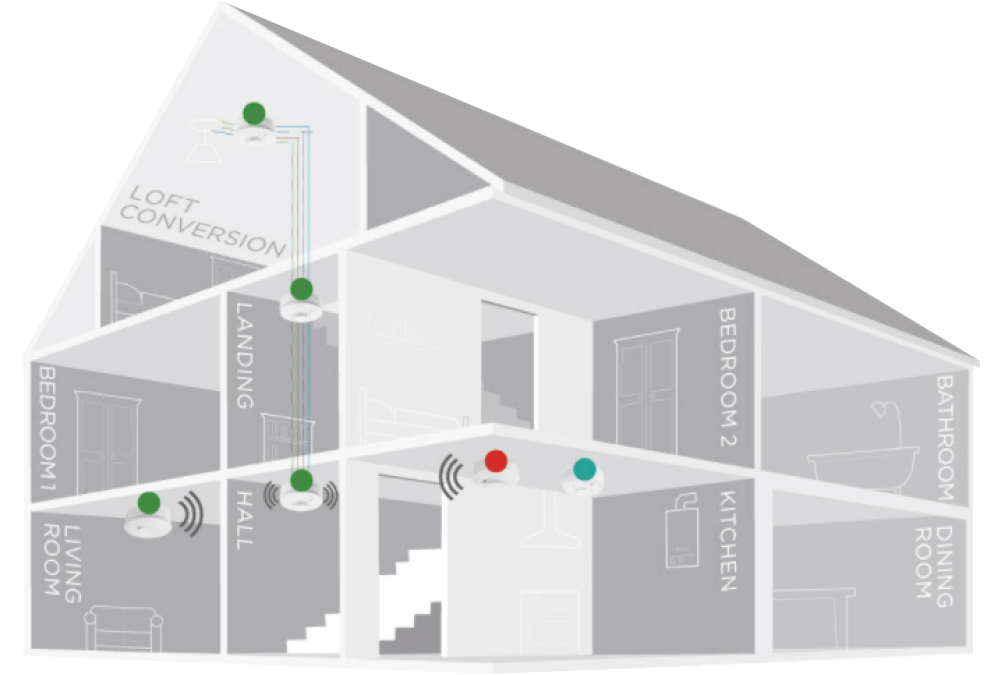
• Install alarms on every floor, including the basement and attic.
• Place smoke alarms in hallways outside sleeping areas.
• Keep heat alarms away from draughts, vents, and fans to avoid false triggers.
• Install heat alarms in kitchens to avoid false alarms due to cooking fumes.
Proper placement of smoke and heat alarms is key to keeping your home safe. Installing them in the right locations ensures they detect fires quickly, giving you and your family more time to escape and alerting you to danger before it spreads.
Maintenance and Testing
• Test alarms at least once a month using the test button.
• Replace batteries at least once a year if your alarms are battery-powered.
• Hardwired alarms with battery backup should be checked for both power sources, usually an LED indicator on the alarm.
• Replace the entire alarm every 10 years, or as recommended by the manufacturer.
Legal Requirements
• UK building regulations require smoke alarms on every floor in all new builds and major renovations.
• Landlords must provide working smoke alarms on every floor in rented properties.
• Heat alarms are not always mandatory, but they are strongly recommended in kitchens or areas prone to heat-related fires.
Expert Installation
• Battery-powered smoke and heat alarms can be fitted by homeowners themselves, but mains-powered (electric) alarms are more reliable and provide long-term protection.
• Installing alarms correctly ensures they work when you need them most. Our team at RW Currion Electrical can advise on the best type, placement, and installation method for your home.
• If your alarms are old, showing signs of wear, or you’re unsure about your coverage, contact RW Currion Electrical today to arrange a safety inspection and professional installation.
Why Choose RW Currion Electrical For Your Fire Detection Installation?
• Fully qualified and insured
• Clear explanations — no jargon
• Work completed to the latest BS 7671 standards
• Safety-first approach to protect your home, family, and electronics
• All installations come with full certification and are emailed for your records.
Honest advice on any fire detection work required
Call now: 01295 533378
Mobile: 07740 100378