Why Does My Circuit Breaker Keep Tripping?
What Does It Mean When a Circuit Breaker Keeps Tripping?
In most cases, a circuit breaker keeps tripping due to an overloaded circuit, a faulty appliance, or a wiring fault.
If your circuit breaker keeps tripping, it usually means the electrical system has detected a problem and switched the power off to protect the wiring in your home from overheating or damage.
Why Do Circuit Breakers Trip?
Circuit breakers are designed to protect your wiring from overheating, short circuits, and electrical faults, helping to prevent damage and reduce the risk of fire.
Occasional tripping can happen, but repeated tripping usually indicates an issue that should be investigated.
What Is a Circuit Breaker?
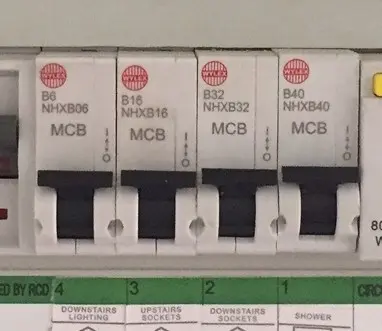
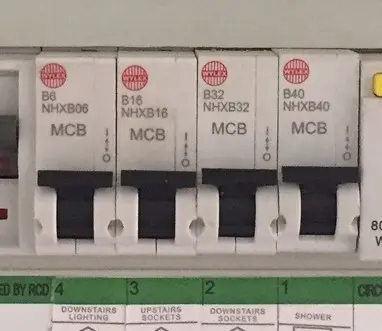
A circuit breaker (often called an MCB – Miniature Circuit Breaker, breaker, or sometimes a trip switch) is a safety device located in your consumer unit, often referred to as the fuse board. Each electrical circuit in your home, such as lighting or sockets, is normally protected by its own breaker.
The circuit breaker constantly monitors the amount of electrical current flowing through the circuit.
Its job is to automatically switch the power off if it detects:
• Too much current flowing through a circuit (overload)
• A short circuit, where live and neutral come into contact
• Faulty wiring or accessories causing abnormal current flow
When one of these conditions occurs, the breaker trips and switches off the circuit. This happens very quickly to prevent the wiring from overheating.
By cutting the power immediately, the circuit breaker helps protect the electrical installation, appliances, and the property itself from damage or fire risk.
Once the fault has been identified and resolved, the breaker can usually simply be reset by switching it back on.
Circuit Breaker Tripping or Fuse Tripping?
Many homeowners still say “my fuse keeps tripping”, even though most modern homes no longer use traditional fuses.
Older fuse boards used rewireable fuses or cartridge fuses that would blow when too much current flowed through the circuit. If a rewireable fuse blew, the fuse wire had to be replaced with the correct rating, typically 5 amp, 15 amp, or 30 amp fuse wire depending on the circuit.
Using the wrong size fuse wire could be dangerous, as oversized fuse wire might not blow quickly enough to protect the wiring.
Modern consumer units now use circuit breakers (MCBs) instead.
A circuit breaker performs the same protective job as a fuse, but instead of melting it automatically trips and can simply be switched back on once the fault has been identified and resolved.
So if someone says their fuse keeps tripping, they could be referring to a circuit breaker switching off in the consumer unit.
Circuit Breakers vs RCDs and RCBOs
Consumer units contain different protective devices, each designed to protect against specific electrical faults.
• MCB (Miniature Circuit Breaker) – protects against overload and short circuits
• RCD (Residual Current Device) – protects against electric shock by detecting current leaking to earth
• RCBO – combines both protections in a single device
If an MCB trips, it usually indicates an overload or wiring fault on that circuit.
If an RCD trips, it normally means there is an earth leakage fault, often caused by a faulty appliance.
Common Reasons a Circuit Breaker Trips
Overloaded Circuits
One of the most common causes is too many appliances running on the same circuit.
For example, several high-power appliances being used at the same time can draw more current than the circuit is designed to handle.
This is particularly common in kitchens where kettles, toasters, and microwaves may be used on the same socket circuit.
Common high-power appliances include:
• Kettles
• Electric heaters
• Washing machines
• Tumble dryers
• Dishwashers
Faulty Appliances
A faulty appliance can cause a circuit breaker to trip when it is switched on.
This may be due to internal electrical faults, damaged cables, or worn components inside the appliance.
If the breaker trips when a particular appliance is used, unplug it and check whether the circuit remains on.
Short Circuits
A short circuit occurs when the live conductor comes into contact with neutral or earth.
This creates a sudden surge of current which causes the breaker to trip immediately.
Short circuits can be caused by:
• Damaged cables
• Loose wiring connections
• Faulty sockets or switches
Circuit Breaker Keeps Tripping With Nothing Plugged In
If a circuit breaker keeps tripping even when nothing is plugged in, the problem is usually within the fixed wiring of the circuit rather than an appliance.
This typically indicates a wiring fault, such as a damaged cable, moisture ingress, or an issue within the circuit.
Possible causes include:
• Damage to cables hidden in walls or ceilings
• Faults in lighting circuits or switches
• Moisture affecting outdoor circuits or fittings
In some cases, the breaker may trip immediately when it is reset, which usually indicates a short circuit or a more serious wiring fault.
In other situations, the breaker may trip again after a short time or even several hours later, depending on when the fault occurs on the circuit.
Delayed tripping can sometimes be caused by moisture affecting external wiring or fittings, or by equipment operating on timed cycles, such as boilers, pumps, or refrigerators starting automatically.
It’s also worth noting that some appliances may be wired directly into the circuit via a switched fused spur, meaning they can’t simply be unplugged. This can make it appear that nothing is connected when the circuit is still in use.
Because these faults are often hidden within the installation, they usually require electrical fault finding to identify the exact cause safely.
What You Can Check Safely
If a breaker trips, you can try a few simple checks:
• Unplug appliances on the affected circuit
• Reset the circuit breaker
• Plug appliances back in one at a time
If your installation has an older fuse board, the fuse wire may blow instead of a breaker tripping. In this case, the fuse wire will need to be replaced with the correct rating before power can be restored.
If the breaker trips again or the fuse wire blows when a particular appliance is connected, the appliance may be faulty.
For circuits such as lighting, electric showers, cookers, or equipment wired through a fused spur that can’t be unplugged like normal appliances, it may help to switch equipment off at the wall switch or isolator, then reset the circuit breaker. You can then switch them back on one at a time to see if a particular circuit causes the breaker to trip again.
If the breaker continues to trip, the fault may be within the fixed wiring or connected equipment, and further investigation may be required.
When to Call an Electrician
You should contact an electrician if:
• The breaker trips repeatedly
• The breaker will not reset
• Multiple circuits lose power
• You smell burning or notice overheating
Electrical faults should always be properly investigated to ensure the installation remains safe.
In Summary
Circuit breakers can trip for a number of reasons, from overloaded socket circuits to appliance or wiring faults. In some homes, particularly older properties, electrical connections may loosen over time or circuits may become overloaded as more appliances are added.
In older installations with rewireable fuse boards, the fuse wire may blow instead of a circuit breaker tripping, but the underlying causes are usually the same.
If a circuit breaker keeps tripping, or a rewireable fuse keeps blowing, a qualified electrician can carry out proper electrical fault finding to identify the cause and carry out any necessary repairs safely.
Need Help With a Tripping Circuit Breaker?
If your circuit breaker keeps tripping, or a fuse wire keeps blowing in an older fuse board, it usually indicates an electrical fault that should be identified and repaired safely.
A qualified electrician can help with:
• Electrical fault finding
• Diagnosing circuits that keep tripping
• Identifying faulty appliances or wiring faults
• Repairs to sockets, switches, and wiring
You may also find these pages helpful:
• Fault finding & electrical repairs
• Electrical services
• Electrical safety advice
If you’d like advice or a quote, get in touch today and we’ll be happy to help.