
Tethered vs Untethered EV Chargers
When choosing a home EV charger, one of the first decisions is whether to have a tethered or untethered charger.
Both types can charge the vehicle in the same way, but the difference is how the charging cable is connected and stored.
A tethered EV charger has the charging cable permanently attached to the charger. An untethered EV charger has a socket on the charger, so the charging cable is plugged in separately when needed.
For most homeowners, the decision comes down to convenience, appearance, cable length, driveway layout and how the charger will be used day to day.
At RW Currion Electrical, we install EV chargers across Banbury and the surrounding villages, advising homeowners on charger choice, charger position, cable routes, load balancing, consumer unit suitability and the correct electrical protection required for a safe installation. For more information about full installations, visit our EV Charger Installation service page.
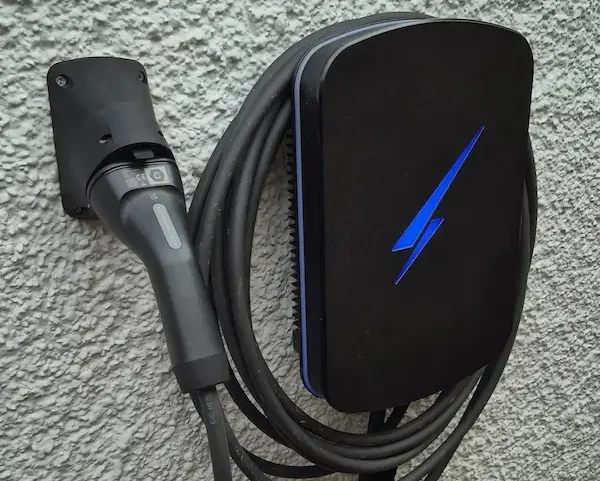
What Is a Tethered EV Charger?
A tethered EV charger has the charging cable permanently attached to the unit.
This means the cable is always there ready to use. You simply take the cable from the charger, plug it into the vehicle and start charging.
Tethered chargers are popular for home installations because they are convenient, especially where the same vehicle is charged regularly.
They are often a good choice for homeowners who want charging to be as quick and simple as possible when they get home.
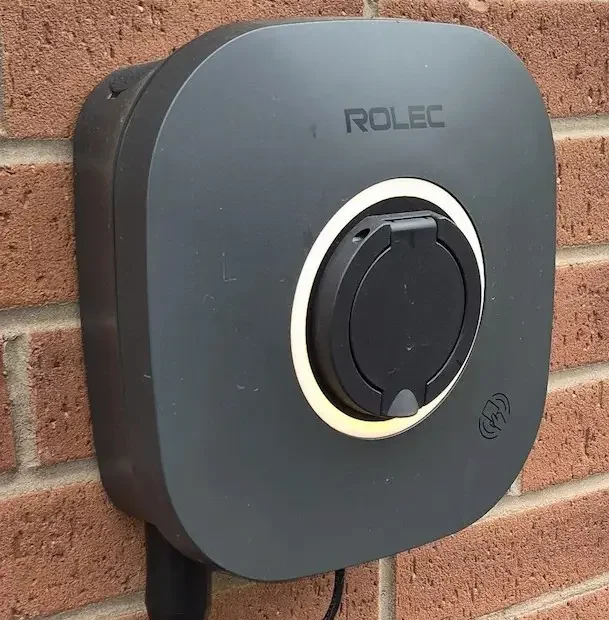
What Is an Untethered EV Charger?
An untethered EV charger has a socket on the charger but no fixed charging lead.
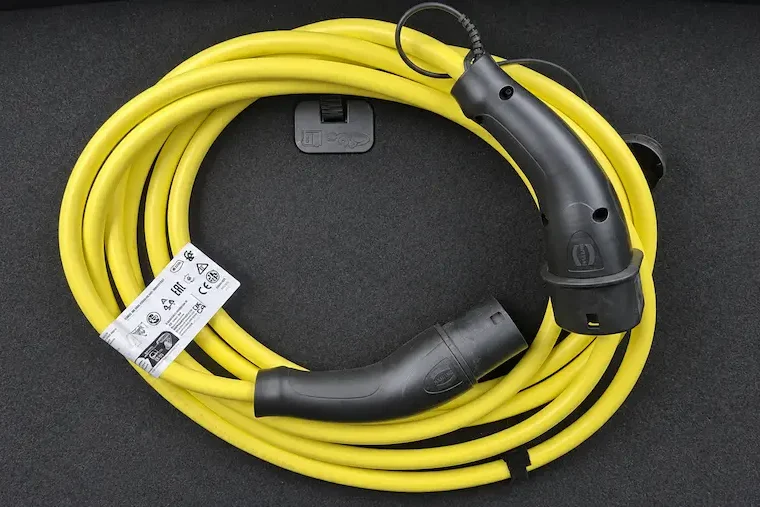
To charge the vehicle, you plug your own charging cable into the charger, then plug the other end into the car.
When charging is finished, the cable is unplugged and stored separately, usually in the car, garage, porch or house.
Untethered chargers can look neater on the wall because there is no permanent cable attached to the charger.
What Are the Advantages and Disadvantages of a Tethered EV Charger?
The main advantage of a tethered EV charger is convenience.
Because the charging cable is permanently attached to the unit, it is always ready to use. You simply take the cable from the charger, plug it into the vehicle and start charging.
Advantages include:
• Very simple to use
• Cable is always attached to the charger
• No need to get the vehicle charging cable out of the boot
• Easier in cold, wet or dark weather
• Good for regular overnight charging
• Often easier for other family members to use
• Less chance of forgetting where the cable has been stored
The main disadvantage is appearance.
Because the cable is permanently attached, it will usually be visible outside the property unless it is wrapped neatly around the charger or stored on a suitable cable holder.
Possible disadvantages include:
• Cable is always visible
• Can look less tidy on some properties
• Cable length is fixed
• The attached plug type is fixed
• Damaged cables may be more awkward to replace
• The charger may look bulkier once the cable is wrapped around it
For many homes, a tethered charger is the most practical option because it makes daily charging quick and straightforward. This does not mean tethered chargers have to look messy. Many modern tethered chargers are smart, tidy units, but cable storage and charger position should be thought about before installation.
What Are the Advantages and Disadvantages of an Untethered EV Charger?
The main advantage of an untethered EV charger is appearance.
Because the charging cable is not permanently attached, the charger often looks cleaner and neater on the wall when it is not in use.
Advantages include:
• Neater appearance
• No fixed cable left outside
• Charging cable can be stored separately
• Easier to change cable length if needed
• Cable can be replaced more easily if damaged
• Can be useful if different vehicles or cables are used
• Good where the charger is in a very visible location
The main disadvantage is convenience.
Every time the vehicle is charged, the cable has to be plugged into the charger and then into the car. When charging is finished, the cable has to be unplugged and put away again.
Possible disadvantages include:
• Slower to use day to day
• More handling of the cable
• Cable needs to be stored somewhere
• Less convenient in bad weather
• Cable may be left in the boot when needed at home
• Other family members may find it less convenient
• More chance of the cable being dropped, dragged or left untidy
Untethered chargers are often chosen where appearance is important, such as on the front of a house or in a prominent driveway position. For occasional charging this may not be an issue, but for regular home charging a tethered charger is usually easier.
Does Tethered or Untethered Affect Charging Speed?
No. Choosing tethered or untethered does not normally affect the charging speed.
Charging speed is mainly affected by:
• The rating of the EV charger
• The vehicle’s onboard charger
• The property’s electrical supply
• The consumer unit and protective device arrangement
• Load balancing settings
• Smart charging schedules
• The condition and design of the electrical installation
Most domestic EV chargers are installed as 7 kW chargers on a single phase supply where suitable.
The tethered or untethered choice is mainly about convenience, cable storage and appearance, not charging performance.
Cable Length and Charger Position
Cable length is an important part of choosing the right EV charger.
Before installation, it is worth thinking about where the vehicle is normally parked and where the charging port is on the car.
Things to consider include:
• Is the charging port at the front, rear or side of the vehicle?
• Do you normally drive onto the drive or reverse in?
• Could the charger need to reach more than one parking position?
• Will the cable cross a path or walkway?
• Could the cable create a trip hazard?
• Is the charger going on the front, side or rear of the property?
• Might a second EV be added in future?
A slightly longer cable can make charging easier, but it also needs to be stored neatly when not in use.
The charger position should be planned properly before installation rather than simply fitting it on the nearest wall.
What Else Should You Think About When Choosing Tethered or Untethered?
The choice between tethered and untethered is not just about the cable. It is also worth thinking about how the charger will look, who will use it and whether your charging setup may change in future.
Untethered chargers usually look neater when not in use because there is no cable wrapped around the unit. However, a tethered charger can still look tidy if it is positioned well and the cable is stored properly.
The final appearance depends on:
• The charger design
• The wall position
• Cable routing
• Cable storage
• How visible the charger is from the road
• Whether the cable can be wrapped neatly
• Whether a separate cable holder is used
For many family homes, a tethered charger is usually the easier choice. If more than one person will be using the charger, having the cable already attached makes things simpler. There is less chance of the cable being left in the boot, taken in another car or stored somewhere inconvenient.
Untethered chargers can still work well, but they rely more on everyone putting the cable back where it belongs.
It is also worth thinking about future use. Most modern EVs in the UK use a Type 2 connection for AC home charging, so a tethered Type 2 charger will suit many current vehicles.
However, if you want more flexibility, an untethered charger allows you to use a different Type 2 cable length if needed. This can sometimes be useful if vehicle parking positions may change, if more than one EV may use the charger, or if the charger needs to suit different drivers.
A good EV charger installation is not just about the charger itself. The cable route, fixings, position and overall finish all make a big difference.
Related EV Charger Advice
If you are planning a home EV charger installation, these advice pages may also help:
• EV Charger Installation service page
• EV Chargers advice hub
• Consumer unit EV charger page
• PEN fault protection page
• How Fast Will My EV Charge at Home?
• Can I Charge an EV From a Normal Socket?
• Can I Have an EV Charger Without a Driveway?
EV Charger Installations in Banbury
RW Currion Electrical installs tethered and untethered EV chargers across Banbury and surrounding areas with the correct protection, testing and certification in accordance with current BS 7671 wiring regulations.
• City & Guilds 2921 qualified in domestic and small commercial EV charger installation
• Fully compliant with Part P requirements and EV charging safety standards
• Assistance with DNO notification where required
• Full testing and certification provided
• Honest advice on tethered and untethered EV charger options
• Advice on charger position, cable length and consumer unit suitability
For honest advice on tethered and untethered EV chargers, consumer unit suitability and home EV charging requirements, visit our EV Charger Installation service page or get in touch for a free quote.
Call now: 01295 533378
Mobile: 07740 100378