
What Is Load Balancing for EV Chargers?
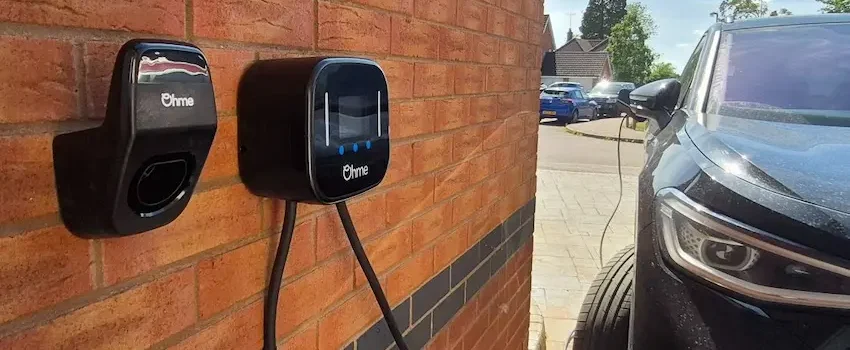
Load balancing is a smart feature used with many modern EV chargers. It helps manage how much electricity your car charger uses compared with the rest of your home.
In simple terms, load balancing stops the EV charger from taking too much power when other electrical items are being used at the same time.
This can be especially useful in homes with electric showers, ovens, hobs, tumble dryers, heat pumps, hot tubs or other higher-powered appliances.
Many smart EV charger apps can also show useful energy information. Depending on the charger and setup, the app may show how much power the property is using and how the demand changes when appliances are switched on, a bit like a simple energy monitor.
Why Does Load Balancing Matter for EV Chargers?
A home has a limited electrical supply. Most domestic properties have a main fuse rated at 60A, 80A or 100A.
A standard 7kW EV charger can use around 32 amps on its own, which is a significant extra demand on an existing electrical installation.
If you currently charge using a Mode 2 charger, often called a granny charger, the demand is usually much lower. A granny charger is the slower plug-in lead that connects to a normal 13A socket and is normally limited to around 10 amps. It is often used as a temporary or occasional charging method, rather than a dedicated home EV charger.
Load balancing becomes more important when you are considering a dedicated 7kW EV charger, because the charger can draw much more current than a standard plug-in charging lead.
If the EV charger was running at full power while several other appliances were also being used, the total demand on the property could become too high.
Load balancing helps reduce the risk of overloading the supply by automatically adjusting the EV charging rate.
How Does EV Charger Load Balancing Work?
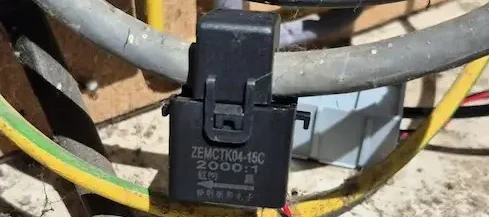
Most load balancing systems use a small device called a CT clamp.
This is fitted around the main incoming live cable, usually near the electricity meter or consumer unit. The CT clamp monitors how much electricity the property is using.
If the house is using very little power, the EV charger can charge at a higher rate.
If the house starts using more power, the charger can slow down automatically.
Once the other appliances switch off, the charger can increase the charging rate again.
Example of Load Balancing
A typical example would be:
• Your EV is charging on the driveway: around 32A
• The oven or hob is being used: around 13A
• The electric shower is used: around 32A to 50A
• The kettle or tumble dryer is switched on: around 10A to 13A
That could put the total demand somewhere around 87A to 108A before allowing for anything else running in the property.
Without load balancing, these loads all add up and could take the property close to, or above, the rating of the main fuse.
With load balancing, the EV charger can reduce its output temporarily so the house supply is not overloaded.
The car may charge a little slower for a short time, but the electrical installation is being managed more safely.
Load Balancing and the Main Fuse
Before installing an EV charger, the size of the property’s main fuse should be checked.
The installer will also look at the existing electrical loads in the property, such as electric showers, ovens, hobs, heating, hot tubs and other higher-powered equipment.
This helps decide whether load balancing is needed and whether the EV charger is suitable for the existing supply.
The local electricity network operator, known as the DNO, needs to be informed about the EV charger installation. In some cases, the DNO may need to be contacted before the charger is installed, especially if there are concerns about the supply capacity, main fuse size or existing electrical demand.
For domestic EV charger installations carried out by RW Currion Electrical, we deal with the correct DNO notification process.
Does Load Balancing Affect Charging Time?
It can do, but usually only when the home is using a lot of electricity.
For example, if the oven, shower and other appliances are being used in the evening, the EV charger may reduce its output for a while.
Later at night, when the electrical use in the home is minimal, the charger can usually return to a higher charging rate.
For most people, this works well because the car is plugged in overnight and has several hours to charge while the rest of the home is using very little electricity.
Load Balancing and Solar Panels
Some EV chargers can also work with solar panels and battery storage.
This is slightly different from basic load balancing.
Solar-compatible chargers may be able to vary the EV charging rate depending on how much solar power is being generated, how much power the home is using and whether battery storage is fitted.
This can help use more of your own generated electricity, but the exact setup depends on the charger, inverter, battery system, meter arrangement and property wiring.
Usually, a separate CT clamp is needed to monitor solar generation. This is in addition to the CT clamp used for load balancing, which monitors the main property supply.
RW Currion Electrical installs EV chargers from brands such as Ohme, Hypervolt and Zappi. These chargers can offer smart charging features, and some models can work with solar generation and battery storage depending on the installation setup.
Load Balancing, CT Clamps and Data Cables
Many chargers use a CT clamp to measure electrical demand.
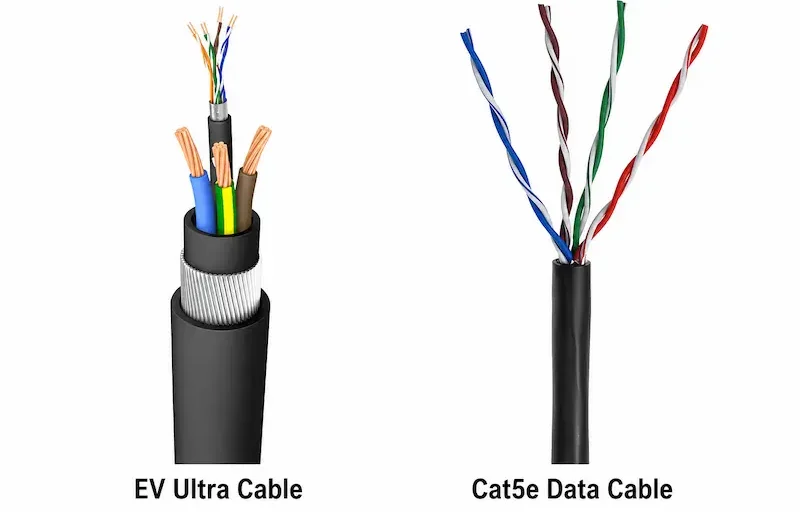
Most chargers need a data cable between the CT clamp and the charger. Others may use wireless monitoring, depending on the brand and installation setup.
Where possible, a wired data connection is often a reliable option.
On some installations, a specialist cable called EV Ultra may be used. EV Ultra cable can include both the power cores and data cores in one cable.
This can be useful where a charger is installed some distance away from the consumer unit or meter position.
Some installations may be better suited to a separate outdoor-rated Cat5e data cable, depending on the cable route, charger location and installation requirements.
Related EV Charger Advice
If you are planning a home EV charger installation, these advice pages may also help:
• EV Charger Installation in Banbury
• EV Chargers Advice Hub
• Can My Consumer Unit Handle an EV Charger?
• What Is PEN Fault Protection?
• Tethered vs Untethered EV Chargers
• How Fast Will My EV Charge at Home?
• How Is a Home EV Charger Wired?
EV Charger Installations in Banbury
RW Currion Electrical installs EV chargers across Banbury and the surrounding villages, including chargers with load balancing, CT clamps and smart charging features where required.
All EV charger installations are carried out with the correct protection, testing and certification in accordance with current BS 7671 wiring regulations.
• City & Guilds 2921 qualified in domestic and small commercial EV charger installation
• Fully compliant with Part P requirements and EV charging safety standards
• DNO notification dealt with where required
• Full testing and certification provided
• Advice on load balancing, CT clamps and consumer unit suitability
• Honest guidance on tethered and untethered EV charger options
• Advice on charger position, cable route and data cable requirements
For honest advice on load balancing, consumer unit suitability and home EV charging requirements, visit our EV Charger Installation service page or get in touch for a free quote.
Call now: 01295 533378
Mobile: 07740 100378