
How Fast Will My EV Charge at Home?
When you have an electric car, one of the first questions is usually how fast it will charge at home.
The answer depends on the charger, the car, the battery size and the electrical supply to the property. For most homes in the UK, a dedicated home EV charger will usually charge at around 7kW.
This is much faster than using a normal 3-pin plug socket and is normally the most practical option for regular home charging.
At RW Currion Electrical, we install EV chargers in Banbury and the surrounding villages, including Adderbury, Bloxham, Bodicote, Deddington, Kings Sutton and nearby areas. Richard can advise on charger position, cable routes, consumer unit suitability, load balancing and the expected charging speed for your property.
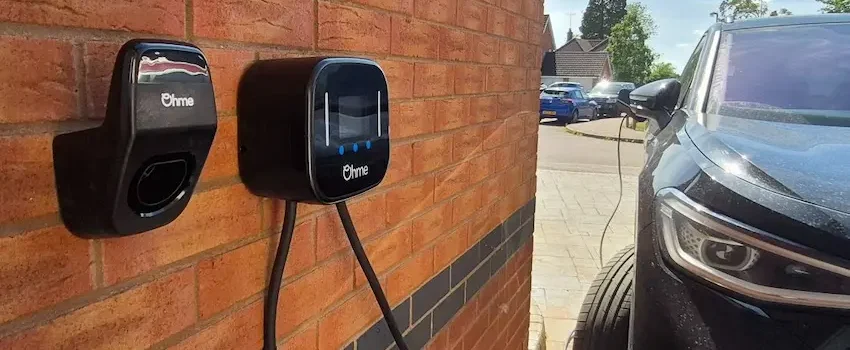
Typical Home EV Charging Speed
Most domestic EV chargers in the UK are rated at around 7kW.
A 7kW home charger can typically add 25 to 30 miles of range per hour, depending on the car, battery size, temperature and charging efficiency.
This means many electric cars can be comfortably topped up overnight, especially if the battery is not completely empty.
In real life, most EV owners do not charge from empty to full every day. Home charging is usually more like topping up a phone battery. The car is plugged in when needed and charged during the evening, overnight or during cheaper off-peak electricity periods.
Why Are Most Home EV Chargers 7kW?
Most UK homes have a single-phase electrical supply.
On a normal single-phase supply, a dedicated EV charger is usually installed on a 32A circuit. This gives a charging rate of around 7kW.
Some commercial properties and a small number of larger homes may have three-phase supplies, which can allow faster charging. However, three-phase is not common in most domestic properties.
For most homeowners, a 7kW charger is the realistic and practical home charging option.
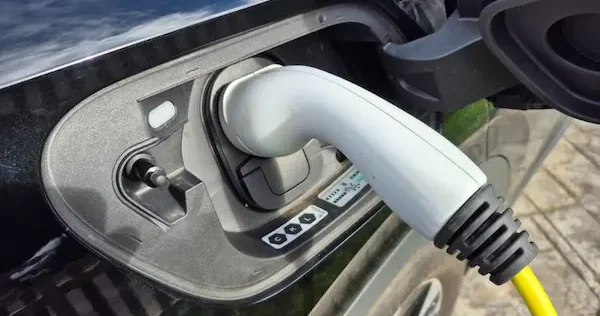
How Long Does a 7kW EV Charger Take?
Charging time depends mainly on the size of the car battery and how much charge is already in it.
As a rough guide:
• A small EV battery may charge in around 5 to 7 hours
• A medium EV battery may charge in around 7 to 10 hours
• A larger EV battery may take 10 hours or more from a low state of charge
These are only general examples. The actual time depends on the vehicle, the battery size, the charger settings and how much energy the car needs.
For many drivers, the important point is not how long it takes from completely empty to full. It is whether the car can recover the miles used during normal daily driving.
For example, if you use 30 or 40 miles in a day, a 7kW home charger can usually replace that energy fairly quickly.
Battery Size Makes a Big Difference
Different electric cars have different battery sizes.
A smaller electric car with a 40kWh battery will usually charge faster than a larger EV with a 75kWh or 100kWh battery, even if both are connected to the same 7kW charger.
This is because the larger battery has more energy to replace.
A simple way to think about it is like filling different-sized tanks. The charger may be delivering electricity at the same rate, but a bigger battery takes longer to fill.
Many electric cars also have software settings that can limit normal charging to around 80%. This can usually be temporarily overridden if you need a fuller charge for a longer journey, but for everyday use many drivers only charge to the recommended limit.
What Can Affect EV Charging Speed?
The charger is not the only thing that controls how fast an EV charges at home.
Charging speed can be affected by the car, the property’s electrical supply, load balancing and the settings in the charger app or vehicle.
The car has its own onboard charger, and this can limit how much power the vehicle will accept from an AC home charger. Most modern EVs can accept around 7kW from a domestic charger, but some vehicles may charge more slowly depending on their onboard equipment, settings or battery condition.
Load balancing can also affect the charging rate. This is a smart feature used with many modern EV chargers. It monitors the electrical demand in the property and can reduce the EV charging rate when other appliances are being used.
For example, if the oven, hob, shower or other high-powered items are running, the charger may temporarily slow down to avoid overloading the supply. Once the household demand drops, the charger can increase the charging rate again.
This means your charger may not always charge at full speed, but it helps keep the installation safer and more suitable for the property.
For more information, see our advice page on what load balancing means for EV chargers.
Why Is Charging From a Normal Socket Slower?
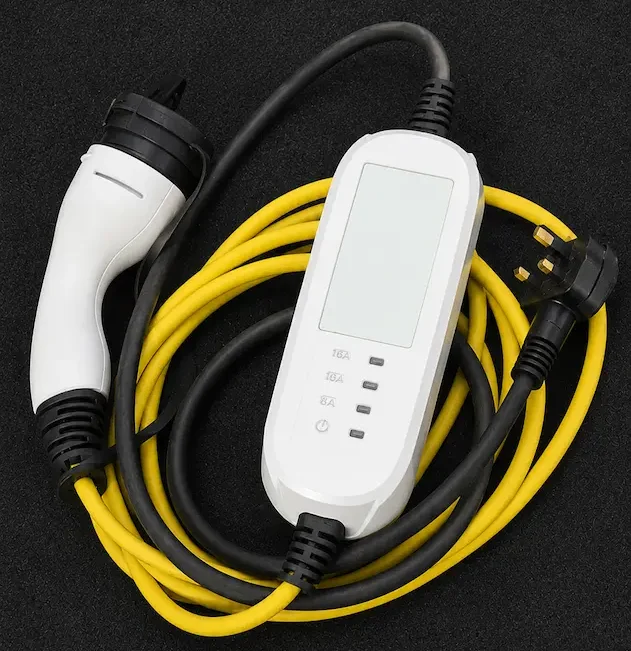
Some electric vehicles can be charged from a normal 3-pin plug socket using a portable charging lead. This is often called a granny charger.
However, this is much slower than using a dedicated home EV charger.
A normal plug-in EV charging lead is usually limited to around 10 amps, which gives a charging rate of roughly 2kW to 2.3kW. This can mean much longer charging times compared with a dedicated 7kW home charger.
A 3-pin socket charger may be useful as an occasional backup, but it is not usually the best long-term solution for regular EV charging.
A dedicated EV charger is normally faster, safer, neater and better suited for everyday home charging.
Can I Get a Faster EV Charger at Home?
In most UK homes, a 7kW charger is the normal option.
Faster AC charging usually needs a three-phase electrical supply, which most domestic properties do not have.
Three-phase EV chargers are commonly rated at 11kW or 22kW, depending on the charger, vehicle and electrical supply. These are more likely to be found in commercial or industrial properties where a three-phase supply is already available.
For most homeowners, upgrading beyond a standard 7kW charger is not straightforward. It may require a major supply change, which can be very expensive and is not usually practical just to charge an electric car faster at home.
Rapid and ultra-rapid chargers, like the ones found at motorway services and public charging stations, are different from normal home chargers. They use DC charging and require much larger electrical supplies.
As a rough guide, many modern EVs can charge from around 20% to 80% in about 20 to 40 minutes on a suitable rapid or ultra-rapid charger. The actual time depends on the vehicle, charger output, battery size, battery temperature and how busy the charging site is.
For a normal domestic property, a 7kW smart charger is usually the sensible home charging solution.
Related EV Charger Advice
If you are planning a home EV charger installation, these advice pages may also help:
• EV Charger Installation in Banbury
• EV Chargers Advice Hub
• Can My Consumer Unit Handle an EV Charger?
• What Is Load Balancing for EV Chargers?
• What Is PEN Fault Protection?
• Tethered vs Untethered EV Chargers
• How Is a Home EV Charger Wired?
EV Charger Installation in Banbury and Nearby Villages
RW Currion Electrical regularly installs EV chargers across Banbury and nearby areas, including Adderbury, Bloxham, Bodicote, Deddington, Kings Sutton, Middleton Cheney, Chipping Warden and surrounding villages.
Work is carried out by Richard Currion, a qualified electrician with 35+ years of electrical experience.
EV charger installations usually involve a new dedicated circuit for the charger, with suitable electrical protection such as a Type A RCBO and surge protection where required. The work is tested, certified and notified under Part P where applicable.
Advice is also given on charger choice, charger location, load balancing, consumer unit suitability and the expected charging speed at the property.
For more information, visit our EV charger installation service page or contact Richard to discuss your property.
Call now: 01295 533378
Mobile: 07740 100378